


How to Improve Clay Soil
Author: Linda Holliday
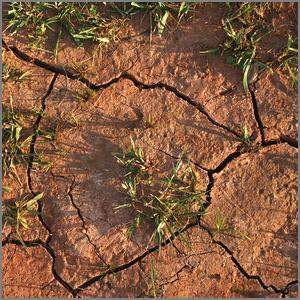
The trouble with clay soil
Although clay soil particles hold nutrients (unlike silt and sand), the dense structure can restrict nutrients from getting into the soil or lock up nutrients that are in the soil. High alkalinity is also likely.
Clay soil has very small pore spaces, retarding water movement. Clay characteristically absorbs water slowly and must be watered gently or most of the water will run off instead of into the soil. Seasoned gardeners know that clay soil worked when wet will compress and become hard as brick when it dries. Working clay when it is dry enough to break into hard clods destroys the granular structure. Air, water, earthworms, microbes, roots and seedlings have trouble moving through clay soil, so crop yields suffer.
Ideal garden soil - Tilth
Tilth is the physical condition of the soil regarding ease of cultivation, seedbed quality, ease of sprouting and deep root penetration. A loam is considered the most desirable texture – a soil that drains well (yet has water-holding ability), doesn’t crust, absorbs water rapidly, assists aeration, and doesn’t form clods. And with the right management strategy, good tilth is achievable in a clay soil.
Few garden soils are of the perfect tilth naturally, which is generally regarded as 20 percent sand and 40 percent each of clay and silt. Cold, wet regions may be better suited to a smaller ration of clay, around 20 percent with 40 percent each of silt and sand. Contrarily, dry regions may benefit from less sand content.
Determining your soil type
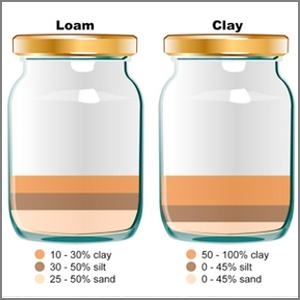
A better (and free) way of determining your clay content is the simple Jar Test. It just requires simply filling a quart jar with one-third soil and two-thirds water. Shake the mixture and set it undisturbed a few hours. Undecomposed organic matter will float to the top. The soil will settle into three distinct layers: sand on the bottom, silt in the middle and clay on top.
Loosening and Aerating Clay Soil
Loosening clay soil takes time and effort. However, with steady amending, clay soil will improve each season. Amendments can be added any time, and mulch can be applied throughout the growing season and winter. After mulch decomposes above ground, it can be used as an amendment by turning it into the topsoil with a garden spade or a digging fork. Deep rototilling is not recommended as it can damage the soil structure.
Amendments for clay soil
Augmenting with organic matter is the first and most important measure to improve heavy soil. Organic material consists of dead plants and animals; as a general rule, if it was once alive, then it counts as organic matter and can be used to amend soil.
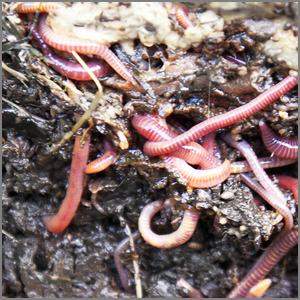
Organic matter also attracts more earthworms that create tunnels, drawing the matter below the surface to break up compacted particles.
Common soil amendments include compost, grass clippings, straw, shredded leaves, rotted manure and dried seaweed. Other organic materials such as spent garden plants, peels, and husks, chopped corn cobs and stalks, peanut shells, coffee grounds, wood ashes, feathers, shredded newspaper (a favorite among worms), pet hair, spoiled hay, and small pieces of cotton, wool or linen fabrics can be turned under to improve clay soil.
Wood chips, bark and sawdust also loosen soil, but will zap nitrogen (needed for decomposition) from the soil if applied too heavily. Pine needles are not recommended unless lime is also added to counteract the acid conditions produced as conifers decompose.
Long-term soil conditioning

To speed up the process, organic matter can be mixed into the top 3 to 6 inches of the soil. This is done by first working the bare soil to a depth of about 8 inches. Spread the mixed organic matter over the soil and then work it in with the rototiller, fork, rake or spade.
While organic matter can, and should be added all year long, the most beneficial time is in the fall while the soil is still warm enough to promote bacterial and fungal activity. Working in organic matter like uncomposted kitchen scraps, straw, hay. clippings, and leaves after the growing season ensures the decay process will not steal valuable nitrogen.
Also leave a heavy layer of mulch over the garden in winter to protect it from heavy rainfall that pounds the soil. Never leave soil bare for more than a few days.
Create paths to keep from walking on growing areas. Wood chips, straw, grass clippings are great for pathways and to suppress weeds.
There is no need to work organic material to a depth greater than 12 inches as the roots of most vegetables do not reach beyond this.
To amend clay soil with sand
Sand, pea gravel, gypsum or peat moss also can improve texture, but lack other benefits of organic matter, such as favorable microbial activity and nutrients for plants to uptake. Many professional gardeners warn that using sand to amend clay can be risky. If sea sand is used, it should first be washed to remove salt. It also takes a lot of sand to make a significant difference (1 part sand to 2 parts clay soil).
To use sand, shovel a 1-inch layer of coarse builder's sand, available at home improvement stores, on top of worked soil. Till the soil again to mix in the sand. Never add sand with the other amendments or before adding amendments; it will turn the soil into a cement-like consistency.
To add amendments before planting
Plant green cover crops to loosen hard soil
Cover crops, also called green manure crops, help loosen clay or compacted soils with their roots and by adding organic matter. They also prevent nutrient loss and erosion during the non-growing season. Leguminous cover crops, such as winter rye, alfalfa, hairy vetch and clover, which add nitrogen to the soil, are usually planted at the end of summer or early fall.
While non-leguminous cover crops (grasses and grains) do not add nitrogen, they improve the structure of clay soil. Oats and buckwheat are examples. Plants are left over winter and then removed in spring.
Green manure crops should be partially rotted on the surface before incorporating into the soil. When finally added, decomposition will be fairly slow and the soil properly enriched, for humus can accumulate in soil only when decomposition is slow.
Liquid soil aeration for compacted soil
Commercial products, such as ClayMend, are also available to amend clay soil by introducing beneficial soil microbes and supplying them with nutrients. The company states that a blend of organic acids gathers ultra-fine clay particles and then microbes work to secure them together. This process opens the soil, allowing it to breathe. The beneficial microbial activity increases and plant roots are able to establish themselves in the restructured soil. Nutrients that have been locked away become free to be attached to the organic material and the clay structures for easy access by the plant roots.
Homemade liquid soil aeration mixtures
Jerry Baker’s Giant Book of Garden Solutions explains how clay soil can be amended from the top down by first puncturing the compacted soil every 8" with a garden fork. Then a 1- to 2-inch thick layer of newspaper, followed by compost and organic matter is spread to a thickness of 1 to 2 feet. The pile is then saturated with a mixture of 12 ounces of beer, + 12 ounces of regular cola, + 1/2 cup of ammonia, + 1/4 cup of instant tea granules, + mixed into 20 gallons of water. If this is done a year ahead, by the following spring there will be 6 to 8 inches of soil ready for planting, according to the book. Over time and with repeated mulching, the layer of "super soil" will reach deeper into the ground to loosen and improve it.
In Summary:
Improving and loosening clay soil is matter of reducing the percentage of clay in the soil mix. This is done by adding organic material (which becomes silt), and by adding sand. Increasing the percentage of silt and sand in your soil does reduce the percentage of clay. Eventually you can shift from having a difficult clay soil to having a nice loam soil.
MORE GARDENING ARTICLES
- Succesfully plant bare-root apple trees
- Make fruit juice without a squeezing press
- Machine picks up fallen apples for cider
- Hand-cranked Apple Peelers
- Cool Nutcrackers for Processing Nuts
- Compost Tractor: Old Piles to New Beds
- Watering and Weeding Sweet Corn
- Buying Guide: Garden Seeders
- Using a Jab Planter on a Small Farm
- How To Improve Clay Garden Soil
- Weed Control: False Seed Bed Method
- Make this Loud Deer Alarm to scare them away
- Beneficial and Harmful Garden Weeds
- Natural Weed Control Techniques
- DIY Test for Herbicide in your Compost
- Antique Tractors for Weeding Vegetables
- History of the Garden Broadfork
- How to Double Dig Garden Beds


