


Garden Spades and Garden Forks - Selection, FAQ, and more
Professional-grade tools with reinforced fiberglass handles. Choose long or short-handled models.
Click here to jump down to the FAQ section

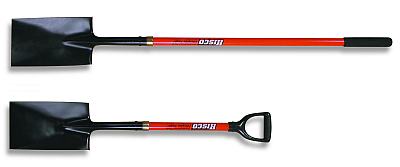
Garden Spade
Long model = $64.90
Use to penetrate down into the soil or sod. The handle's low lift angle lets you put your weight straight down onto the blade for efficient digging, spading, and edging. Blade is 7" wide with thick 14 gauge steel. More Info...
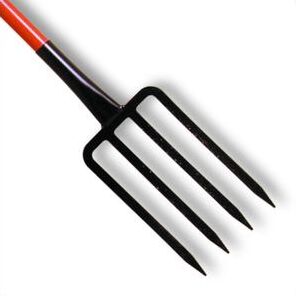

Garden Fork
Long model = $79.90
Use to loosen and aerate the soil. Strong forged steel tines easily slide deep into the ground. Also used for moving mulch and compost. The tines are 7" wide and 10" long. More Info...
Frequently Asked Questions (FAQ) About Garden Spades and Forks
Click or tap a question below to see the answer.
Garden Spade section: Click to jump down to the
What is a garden spade?
What is a garden spade used for?
How do you use a garden spade?
What spade is best for digging holes?
What are the different types of garden spades?
What is the difference between a garden spade and a shovel?
What is the difference between a garden spade and a fork?
Garden Fork section:
What is a garden fork?
What is a garden fork used for?
Can a garden fork be used for weeding?
What are the variations of a garden fork?
What is a potato fork?
What is the difference between a garden fork and a spading or digging fork?
What is the difference between a pitchfork and a garden fork?
What is a garden spade?
- A garden spade is a tool that digs into the soil using a slicing action. It's straight blade is pressed into the soil with your foot. They come with either long or short handles. There are a variety of types, but all are used for digging holes, turning garden soil, and breaking new ground. Spades are not intended for scooping up loose soil - that is the job of a shovel which has a different type of blade and handle arrangement.
- Click to learn about our Garden Spades
What is a garden spade used for?
- Garden spades are commonly used for digging holes, breaking new ground, turning over garden soil, and for double-digging garden beds.
- Click to see our article: Double Digging - The Method, and a Quick History
How do you use a garden spade?
- To use a garden spade, first position the blade about two inches back from the edge of the existing hole or dug space. Press the blade straight down into the soil with your foot. Then lever back the handle to pick the slice up on the blade and then flip or toss it slightly forward to till or turn the soil. If breaking new ground to create a gardening space, pick or rake out the strips of sod from this loose soil to reduce future weeding issues.
What spade is best for digging holes?
- The best spade for digging small round holes (like for planting bushes or trees) is the Transplanting Spade (also called a Sharpshooter shovel) because of it's long narrow blade and rounded tip for easy penetration into the soil. The best spade for digging larger square holes or trenches is the Digging spade because of it's rounded point for easier slicing into the earth and wider blade for more soil removal.
- Click to see our article: The Many Uses of a Garden Spade
What are the different types of garden spades?
- There are five types of garden spades: the Standard spade, the Digging spade, the Border spade, the Transplanting spade, and the Pointed spade.
– The Standard spade is the common general purpose tool with a straight edge and a rectangular blade that is 6 to 7 inches wide.
– The Digging spade has a curved edge for easier cutting and a wider blade that is 8 to 9 inches wide to move more soil.
– The Border spade has a straight edged narrower blade that is 4 to inches wide for cutting curves and and working in tight places tight spaces.
– The Transplanting spade has a long narrow blade 4 to 6 inches wide with a rounded tip for cutting roots to divide plants.
– The Pointed spade has a thick tall V-shaped blade for rocky soil and strong roots.
What is the difference between a garden spade and a shovel?
- The difference between a spade and a shovel is what they are used for, and in the angle between their blades and handles. A spade is intended for penetrating down into the soil to loosen it and break it up, which is the first part of the digging process. A shovel is intended to scoop up this loose soil and lift or toss it to a new location, which is the second part of the digging process. To make each task easier on the tool's user, the spade's handle is close to being straight inline with the blade which makes it easier to hold the handle while pressing the blade into the soil. A shovel's handle is angled away from it's blade so that the user doesn't have to lean over very far while scooping up loose soil.
- Click to see our article: The Many Uses of a Garden Spade
What is the difference between a garden spade and a fork?
- A garden spade has a solid steel blade and is used for cutting out slices of soil. This is different from a garden fork that has three or four tines and is used for loosening and aerating soil in place by levering the handle back and forth.
What is a garden fork?
- A garden fork is a tool used for loosening and aerating soil. It's strong tines are pressed into the soil with your foot. The soil is then either loosened in place by tilting the handle back and forth to move the tines, or the handle can be levered back far enough sweep the tines up through the lower and upper layer of soil. Garden forks come with either long or short handles.
- Click to learn about our Garden Forks
What is a garden fork used for?
- A garden fork is primarily used for loosening or aerating garden soil. But it can also be used to stir in compost or amendments, scoop up thick or stringy mulch, and turn compost piles.
- Click to see our article: Double Digging - The Method, and a Quick History
Can a garden fork be used for weeding?
- No, a normal sized garden fork is not useful for weeding. But a small hand fork like used in flower beds can do some light weeding.
What are the variations of a garden fork?
- There a six types of garden forks. They are the Standard fork, the Spading/Digging fork, the Border fork, the Compost fork, the Potato fork, and the Broadfork.
– Standard garden forks have strong slightly curved tines allowing it to be used for multiple tasks.
– Spading/Digging forks have straight heavy tines for loosening tough soil.
– Border forks have a narrower head with shorter tines for lighter use in flower beds.
– Compost forks have a wider head with lighter longer tines for turning and mixing compost.
– Potato forks come with 4 to 8 tines depending on their width but all have rounded or ball tips to prevent damage to buried potatoes.
– Broadforks have very heavy-duty construction for deep soil penetration and aeration.
What is a potato fork?
- A potato fork is used to harvest potatoes or other root crops from below the ground. There are multiple versions, but all have blunt or ball tips to minimize stabbing damage to the crop. Some look much like a common garden fork with four tines, others look like a wide manure fork with six to eight tines, and there is even one that looks like a hoe with four tines set perpendicular to the long handle.
What is the difference between a garden fork and a spading or digging fork?
- A spading or digging fork looks much like a standard garden fork, but the tines are usually a little stronger, thicker, and straighter. The thicker tines reduce bending when used for spading tough soils, and the straighter tines allow easier penetration when digging into the soil.
What is the difference between a pitchfork and a garden fork?
- A pitchfork differs from a garden fork in usage and construction. A pitchfork is used for scooping and tossing light materials like straw, hay, and mulch. A garden fork is used for digging into soil to loosen and aerate it. The pitchfork is built much more lightly to make it easier to maneuver and because it is not subject to the forces that a garden fork is.
See all of our:
Click to see our:
Why do I need a heavy-duty spade and fork?
It can save you money. It can save you frustration. And it can save you from an injury.
Let's tackle injuries first. When cheap wooden-handled spade snaps, you may fall backwards and wrench your back muscles or land on something dangerous. Second, there is the frustration of having a broken right in the middle of a job when time is short and the store is miles away.
Lastly there is money... If a heavy-duty spade or fork costs twice as much, but lasts as long as two cheap tools, then you at least broke even. And when it outlasts three of them, you are money ahead!

