


Broadforks - Selection, FAQ, and more
Click here to jump down to the FAQ section
These unbreakable tools will improve your soil, decrease your garden prep time, and save your back!
Use them for tasks such as:
- Deep soil aeration
- Loosening hard soil
- Breaking new ground
- Removing sod
- and more!
Stop damaging your soil with a rototiller and hurting yourself double-digging. Check out our MeadowCreature Broadforks below.
• Use for deep aeration, in all soils
• Use in medium and large gardens
• Strong enough to break new ground
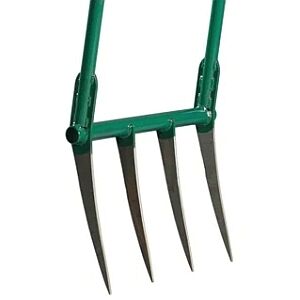


• Use for deep aeration, in all soils
• Use in medium and large gardens
• Strong enough to break new ground
• Use from outside of tall raised beds
• Use in small gardens & tight spaces
• Strong, agile, and easy to handle
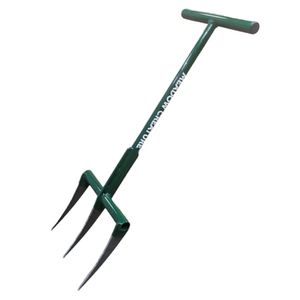
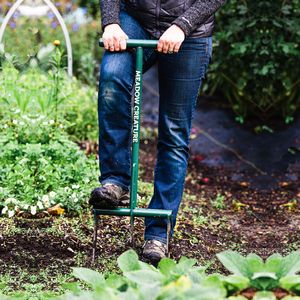
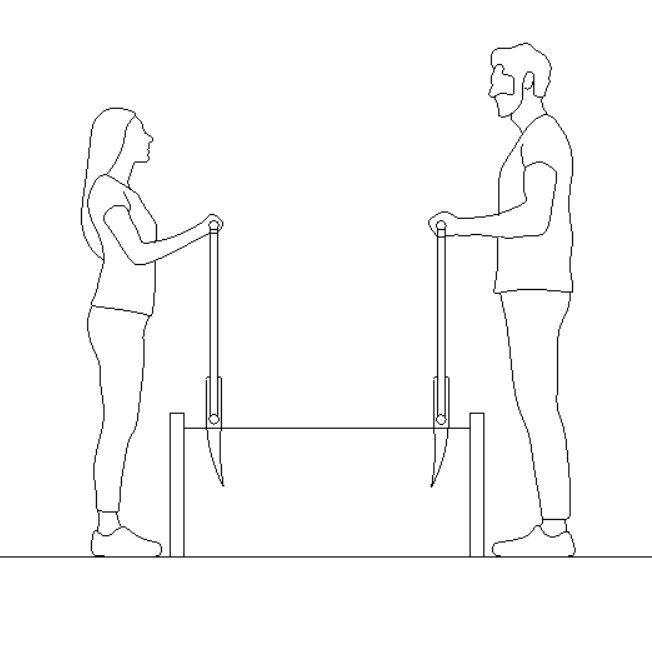

• Use from outside of tall raised beds
• Use in small gardens & tight spaces
• Strong, agile, and easy to handle
Frequently Asked Questions (FAQ) About Broadforks
Click or tap a question below to see the answer.
What is a broadfork?
What is a broadfork used for?
How do you use a broadfork?
Can a broadfork be used to remove sod or break new ground?
What are the advantages of wood or fiberglass handles on a broadfork?
What are the disadvantages of wood or fiberglass handles on a broadfork?
What is the advantage of steel handles on a broadfork?
What are the disadvantages of steel handles on a broadfork?
Why do soil aeration with a broadfork?
Why not use a rototiller for garden soil aeration?
When was the broadfork invented?
What is a broadfork?
- A broadfork is a garden tool used to loosen and aerate soil before planting. It has long strong steel tines or blades that are pressed into the soil with your foot or by standing on the lower horizontal bar that the tines attach to. It also has one or two long handles that you pull on to lever the tines in a arc up partially up towards the surface of the soil to crumble and aerate the deep soil with minimal disturbance on the topsoil.
What is a broadfork used for?
- A broadfork is used to to loosen and aerate garden soil easier and deeper than a regular garden fork or tiller can reach. It does this by levering steel tines up through the soil to break through compacted layers and create air passages.
How do you use a broadfork?
- To use a broadfork to aerate garden soil, start by pressing the tines straight down into the soil. Then lever the handles back toward you 45 degrees to loosen the soil. Now pull the broadfork towards you to slide it out of the ground and back about 8 inches. Tilt it back to the upright position and repeat the above steps until you reach the end of your row or garden bed.
- Click to see our article: How to use a Broadfork
Can a broadfork be used to remove sod or break new ground?
- Yes, but only the unbreakable MeadowCreature broadforks are strong enough to survive the extreme forces of removing sod or breaking new ground. When removing sod, the handles are leveled all the way down to the ground to bring the tines up through the sod. When breaking new ground, do it multiple passes through the new space increasing the depth with each pass (4 then 8 then 12 inches) to better crumble the soil.
- Click to see our article: How to use a Broadfork
What are the advantages of wood or fiberglass handles on a broadfork?
- The advantages of wood or fiberglass broadfork handles are cost and weight. They are less expensive that steel handles, both because of material cost and shipping cost due to the ability to ship disassembled in a smaller lighter package. They are are also lighter than steel handles which decreases the effort needed to move the broadfork around the garden.
- Click to see our article: Are Wood, Fiberglass, or Steel Broadfork Handles Better?
What are the disadvantages of wood or fiberglass handles on a broadfork?
- The disadvantages of wood or fiberglass broadfork handles are low strength and possible breakage. The handles are subject to a lot of leverage if the ground is hard or the tines catch on a root or rock. That high levering force can break wooden or fiberglass handles.
What is the advantage of steel handles on a broadfork?
- The advantage of steel broadfork handles is high strength. Steel handles are hard to bend, and will not break like wood handles do.
- Click to see our article: Are Wood, Fiberglass, or Steel Broadfork Handles Better?
What are the disadvantages of steel handles on a broadfork?
- The disadvantages of steel broadfork handles are weight and cost. Steel handles do weigh more and require more effort move around the garden. They are also more expensive because of both the material cost and the shipping cost of the large oversized carton needed to hold a broadfork which can not be disassembled because it is fully welded together.
Why do soil aeration with a broadfork?
- Aerating soil with a broadfork allows fresh air to reach deeper into the soil where it benefits roots, fungi, and microorganisms. It also allows rain to seep deeper into the ground without puddling or compacting the soil. Broadfork aeration is less damaging to soil composition than tilling or double-digging. With roomier space for root growth, crops will absorb more nutrients for a bigger yield.
- Click to see our article: Why do soil aeration with a broadfork?
Why not use a rototiller for garden soil aeration?
- The disadvantages of using a rototiller to do soil aeration are soil structure damage and soil compaction. A tiller churns the upper and middle layers of the soil damaging fungi, microorganisms, and worms. This loss of life reduces the soils ability to collect and transform nutrients needed by your crop's roots. Excessive tilling often results in soil becoming brick-like (hardpan) and this compaction reduces water seepage into the soil, seed sprouting, root penetration and crop nutrient and water uptake - all of which reduce crop yields.
- Click to see our article: Why do soil aeration with a broadfork?
When was the broadfork invented?
- The broadfork was invented in the 1950's in France as an efficiency improvement to replace double-digging. It was later introduced to gardeners in the USA by popular gardening author Eliot Coleman in the 1970's. The broadfork gradually changed from its original shape as different people experimented with it. Tines became blades in some cases. Single and dual handled versions were created. Some had more than 5 tines while some had fewer. There are currently five broadfork manufacturers in the US.
- Click to see our article: Inventing the Broadfork

